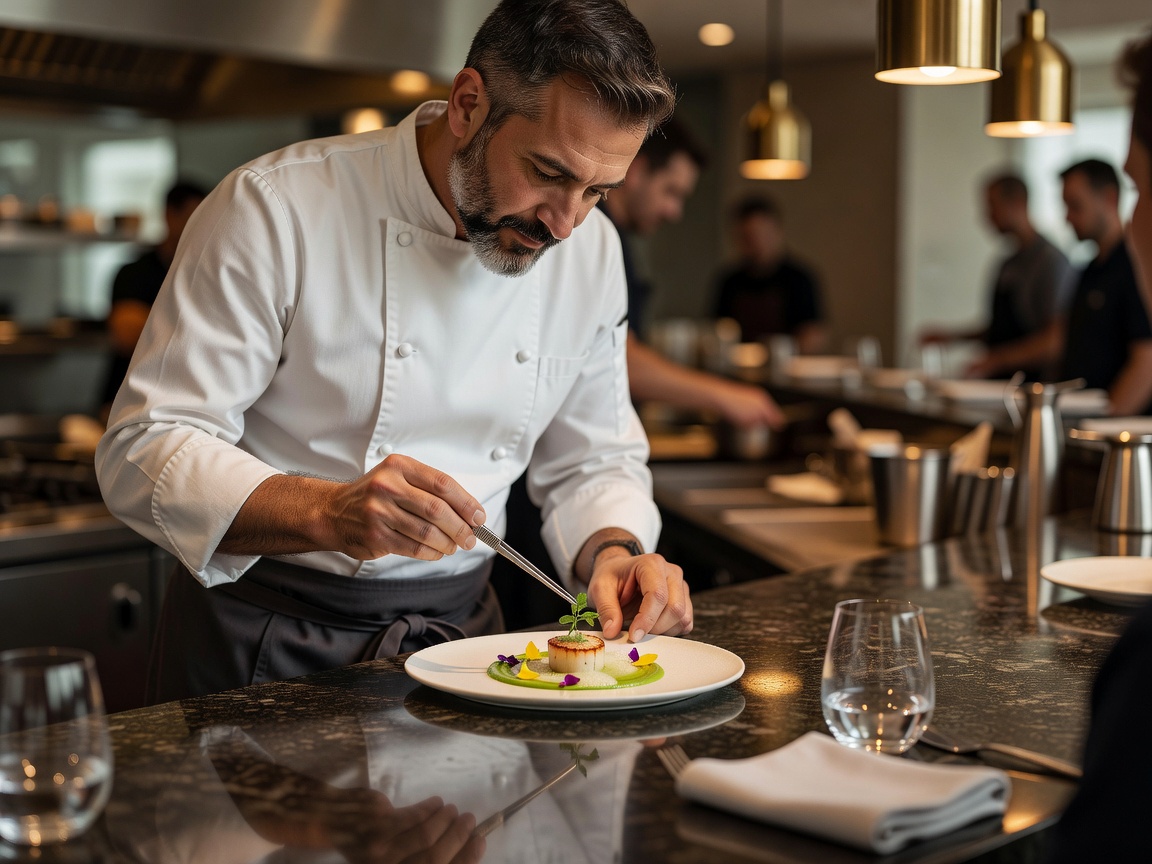
There’s a particular pleasure in seeing dinner take shape: a plate leaves the pass, a cook finishes a garnish, and the next course arrives with a little more context than it might from across a busy dining room. A chef’s table can bring guests close to that process. A tasting menu gives the meal a sequence. Sometimes the formats overlap; sometimes they don’t. The name on a venue’s page is a starting point, not a complete description.
What “chef’s table” can mean
Some chef’s tables are counters beside an open kitchen, where guests watch service unfold. Others are tables in a separate room, with the chef or service team introducing a planned menu. A few may be small dining areas within the main room rather than a dedicated chef-facing experience. Ask where you will sit, what you can see and how much interaction is typical. The kitchen may be focused on service; conversation with the chefs isn’t guaranteed.
That proximity is part of the appeal, but it also brings a different atmosphere. You may hear equipment, feel the movement of a working kitchen or sit close to other guests. Guests who enjoy energy and craft may find that absorbing. Anyone expecting a hushed, secluded dinner may be happier in a conventional private room.
Tasting menus are a rhythm, not just a course count
A multi-course menu can build from lighter dishes to more substantial ones, revisit an ingredient or reflect a changing season. The progression is part of the experience, and the kitchen usually controls the order and pacing. Ask how long the full meal generally takes, whether courses arrive at a set rhythm and whether the group needs to order the same menu. Don’t assume that every guest can choose a different sequence.
Seasonality can make a menu feel connected to its moment, but it also means the dishes may change. A restaurant may share a sample structure without promising the same ingredients on the day. Treat published menus as a useful indication of style, not a guarantee of what will be served. If a particular ingredient or dietary requirement matters, explain it when enquiring and request a clear answer from the venue.
Presentation and service are part of the pacing. Some kitchens narrate each dish in detail; others keep introductions short and let the plate speak. There is no single correct version. If your group prefers a relaxed meal with conversation, ask how the restaurant balances explanations with time to eat and talk.
Dietary communication deserves a head start
Share allergies, intolerances and dietary requirements as early as possible, using precise language. “No nuts” may not tell a kitchen whether cross-contact is a concern; “vegetarian” doesn’t always explain whether dairy or eggs are acceptable. Ask the restaurant what it can accommodate and how it manages the request. A tasting menu may be less flexible than a conventional menu because courses are planned as a sequence, but policies differ. Never assume an adaptation is available until the venue confirms it.
Group coordination matters, too. Confirm whether every guest follows the same menu or whether alternative sequences are possible, and ask when final choices are due. If someone may need to leave early, find out whether the service format can accommodate that gracefully.
Choosing a counter or a private room
A chef-facing counter encourages observation and can make a small group feel immersed in the work of the kitchen. It is a strong fit for curious diners who enjoy a lively, close-up experience. Its limitations are straightforward: the seating may be fixed, conversation can compete with kitchen sounds, and the format may not offer much separation from other guests.
A conventional private room gives a group more control over conversation, seating and the pace of their own interaction, but may offer little view of preparation. A private tasting room, where available, can combine a dedicated table with a planned menu. That possibility should be confirmed directly; it is not a standard feature of every restaurant or tasting menu.
Advantages and limitations
The chef’s-table format can make technique and service visible, create a shared point of interest and give a meal a sense of occasion without requiring a formal speech. A tasting menu offers a coherent culinary arc and can introduce guests to a kitchen’s style. On the other hand, long meals, fixed sequences, close seating or limited dietary flexibility won’t work for everyone. People who prefer to choose each dish individually may find an à la carte menu more comfortable.
Before you enquire
- Where exactly is the table, and what can guests see or hear?
- How many courses are typical, and how long should guests allow?
- Does the whole group need to choose the same menu?
- How are allergies, dietary requests and cross-contact questions handled?
- Is interaction with the kitchen part of the format or simply possible?
- What are the payment, deposit and cancellation arrangements?
Good for
Curious diners, food-focused celebrations, small groups who enjoy a shared experience and guests interested in the craft behind a meal. It may be less suitable for confidential business conversation, very young groups or anyone who wants a quiet, highly flexible dinner.
What to know
Chef’s-table formats, menus, pacing and dietary policies vary. This is a general editorial guide, not a verified description of a particular restaurant. Confirm the room, menu structure, accessibility, current terms and any dietary arrangements directly with the venue.